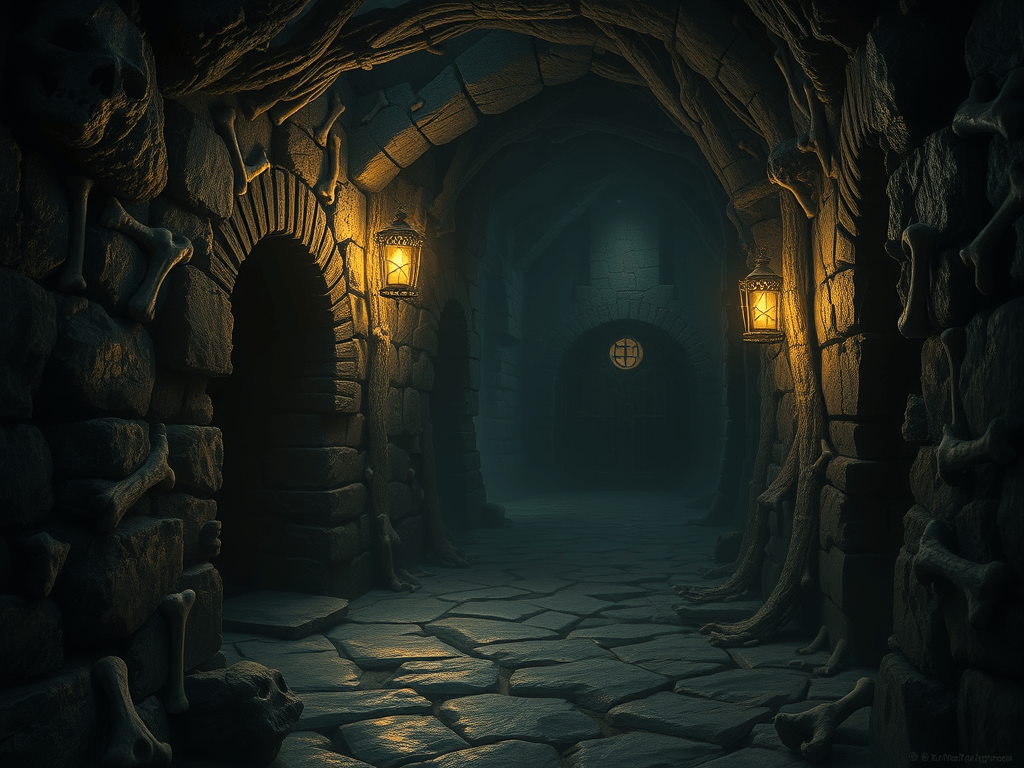
There is something honest about a maze. Not the clever kind. Not the puzzle box that winks at you and promises it can be solved if you just think the right way. I mean the kind that opens its mouth and waits. The kind that does not care if you understand it. The kind that does not reassure you that there is a correct path.
The Rat King’s Maze begins that way. You stand at its edge, tunnels yawning open like a wound in the earth, and there is no fanfare. No explanation. No sense of invitation. It does not welcome you. It simply exists, and that alone is enough to make you hesitate. That hesitation is why I love it.
From the moment you step inside, the maze refuses to give you comfort. Your lantern light catches bones pressed into the walls, not laid there with ceremony, not honored, but embedded like decoration. This detail matters to me more than any trap or monster ever could. It tells you immediately that this place was not built for guidance or safety. It was built to endure, and whatever passed through it before you did not leave cleanly.
As you move deeper, the repetition becomes oppressive. The walls look the same. The bones remain. Turns blur together. North feels like south. East feels like a lie you told yourself because you needed direction to exist. This is not a maze that tests intelligence. It tests composure. I love that it asks you to keep going without rewarding you for doing so.
There is no dramatic reveal halfway through. No moment where the maze suddenly explains itself. Instead, it tightens. The corridors fold in on themselves. The sense of distance collapses. You begin to realize that progress here is not about finding the right turn, but about resisting the urge to give the maze meaning it has no intention of providing.
That’s something games rarely allow themselves to do anymore.
We are so used to being taught. So used to being guided, nudged, reassured. The Rat King’s Maze does none of that. It lets you get lost. Truly lost. Not lost in a theatrical way, but in the quiet, creeping way where you start to doubt your own memory. Where you wonder if you have already been here, or if the maze has subtly changed around you. I love that it trusts the player enough to sit with that feeling.
The maze is long. Intentionally so. It stretches farther than feels reasonable. It repeats its imagery until it becomes almost meditative, then pushes past that into discomfort. Bones become background noise. The lantern becomes less of a tool and more of a ritual. You keep moving not because you are confident, but because stopping feels worse. And then, eventually, it ends.
Not with triumph. Not with relief so much as release. The pressure eases just enough for you to notice how tightly you’ve been holding yourself together. That line exists because that is exactly how mazes like this work on the mind. You don’t realize what they’ve taken from you until they finally stop taking.
When the archway rises from the stone at the far end, it doesn’t feel like a reward. It feels like permission. Escape, or something close enough to pass for it. That phrasing matters to me. Because the maze doesn’t promise safety on the other side. It doesn’t pretend the experience didn’t change you. It simply lets you leave. And sometimes, that’s all a place like this should do.
I love the Rat King’s Maze because it is unapologetic. Because it is patient. Because it does not bend itself to modern expectations of constant feedback and reassurance. It exists to be endured, not mastered.
 The Ventureweaver
Leave a comment