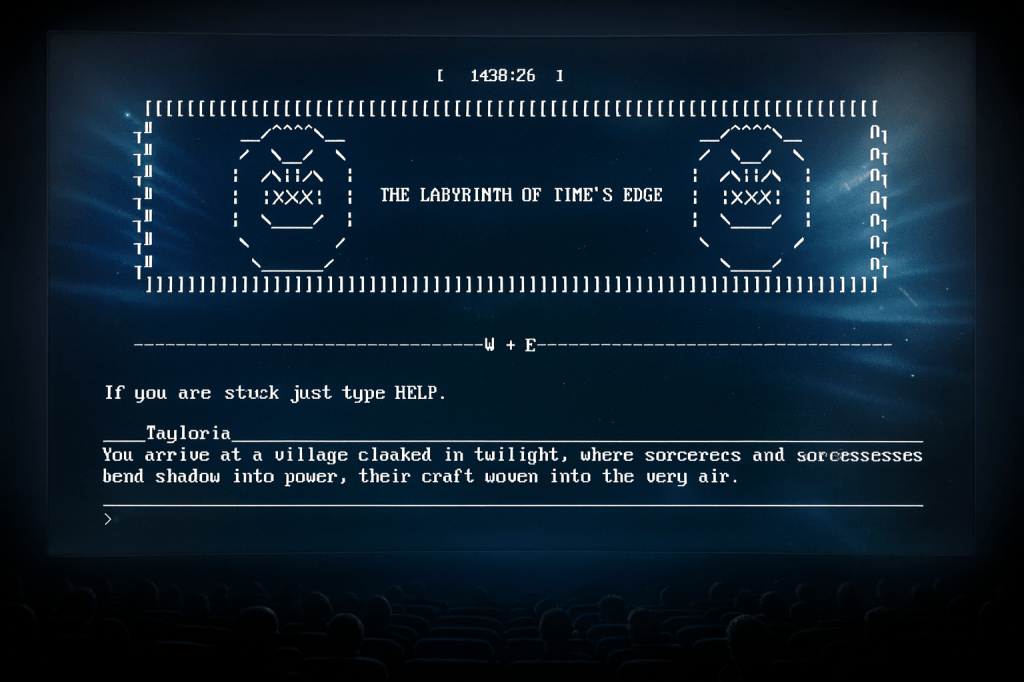
There was a time when worlds were light.
They lived inside humming towers beneath desks and on screens that glowed softly in the dark. They asked for nothing but patience and curiosity, nothing but a willingness to read and imagine. A keyboard was enough. A blinking cursor was enough. A mind willing to wander was enough.
Somewhere along the way, we were told this was no longer sufficient. That imagination needed spectacle. That silence needed noise. That games had to grow larger, louder, and more expensive to be worth our time. We were told this was progress, and that anything less was nostalgia.
But nostalgia does not build worlds that last.
What we are living through now is not progress, but weight. Games collapse beneath their own excess. They arrive unfinished, stitched together with promises of patches and updates that may or may not ever fully heal them. Prices rise while stability fractures. Ownership becomes conditional, temporary, revocable. Worlds disappear when servers shut down or licenses expire, leaving behind nothing but trailers and patch notes as gravestones.
This has become normal, and that is the most troubling part of all.
Against this quiet erosion, something else exists. Not loudly, not aggressively, but with intent.
The Labyrinth was not built to impress hardware or to compete for attention in a crowded marketplace. It was built to endure time itself. It asks almost nothing from the machine that runs it, because it was never meant to be bound to an era of specifications or upgrade cycles. It does not fear obsolescence, because it was designed outside of it. Long after today’s most expensive titles struggle to launch on future systems, this world will still open instantly, unchanged, waiting exactly as it was left.
There is no graphics card requirement because imagination has always been the strongest one. There is no server dependency because a world should not require permission to exist. There is no price tag because wonder was never meant to be rationed.
This world was not assembled by committees or guided by monetization strategies. It was carved slowly, one room at a time, by hand. Thousands of rooms, each placed with care. Every sentence written to invite the reader into the act of creation rather than to overwhelm them with spectacle. There are no shortcuts here, no procedural padding masquerading as depth. Density lives in the spaces between words, in what is suggested rather than shown.
This is not content produced to fill a schedule. It is craft sustained by devotion.
We have been taught to believe that greatness requires power, that immersion demands realism, and that depth can only be achieved through scale. Yet the most enduring worlds have always been carried by language. Atmosphere does not require reflections. Fear does not need photorealism. Meaning does not improve with higher resolution shadows. What improves a game is care, patience, and respect for the player’s imagination.
By choosing the most basic foundation possible, the Labyrinth removes itself from the churn of obsolescence. It does not race against time. It walks beside it, slow and certain, unafraid of being left behind.
This is not a rejection born of bitterness. It is written out of love. Love for the nights spent lost in imagined corridors. Love for the sound of a keypress opening a door. Love for games that trusted players to think, to linger, and to feel rather than react. Many creators today care deeply, and many are trapped inside systems that punish patience and reward haste. This is not an attack on them. It is a refusal to accept a model that treats art as disposable and players as revenue streams.
The Labyrinth exists as proof that another path remains open.
This text adventure does not ask to be noticed or validated. It does not beg for relevance or chase trends that vanish as quickly as they appear. It simply exists, complete and whole. It will be copied, archived, and preserved. It will survive migrations, forgotten hardware, and future curiosities. While others fade into incompatibility and shutdown notices, this world will still be playable, still intact, still waiting.
It was never built to dominate the present moment. It was built to survive the future.
There is no rallying cry shouted into the void here, no demand for allegiance. The movement happens quietly, when someone chooses permanence over spectacle and imagination over excess. It happens when a player downloads something free, stable, and enduring, and realizes they have lost nothing at all. This is not nostalgia. It is resistance through restraint.
This is not a call to action. It is a statement carved into the stone of time.
A world exists that does not expire. A game exists that does not ask for more than it gives. A labyrinth exists that will still be here when others are gone.
The door is already open.
 The Ventureweaver
Leave a comment